Where do your students really go when they go online?
July 20, 2019

Smartphones that slip into a backpocket and tablets that tuck into schoolbags have allowed kids to inhabit a digital world largely invisible to the grown-ups - and seemingly impossible to supervise.
Are you old enough - or young enough - to remember POS? It stands for “parent over shoulder” - and just a few years ago it was a common messaging shorthand. But that was way back in the day when most children’s online lives revolved around the PC in the loungeroom and maybe - if they were lucky - the family laptop.
The mobile revolution has changed all that.
Today, over 90% of Aussie young people - and two-thirds of primary school kids - own a mobile device. The average age for a first smartphone is now around 10, and even babies are swiping devices by 12 months of age.
Exactly what kids are getting up to online, away from the prying eyes of teachers and parents, has been the subject of much speculation. Yet, for obvious reasons, there has been very little data to provide a window onto this secret world - until now.
In the course of protecting thousands of children at school, at home and on the go, Family Zone has collected a trove of data that reveals the online activity kids at various age groups are engaging in: the what, the when and the where.
(NB: Family Zone data shows what sites kids are attempting to access online - not necessarily what they’re actually consuming.)
The What
So what, exactly, are kids doing all day when they’re online?
Among children up to age 8, YouTube (74%) and games (86%) are the biggest drawcards. One in five in this age group are desperately seeking Snapchat - where the age restriction is 13 - and 14% are attempting to access porn, while over half (54%) are looking for other risky content (think violence, hate speech, criminal activity, illegal downloads, etc.)
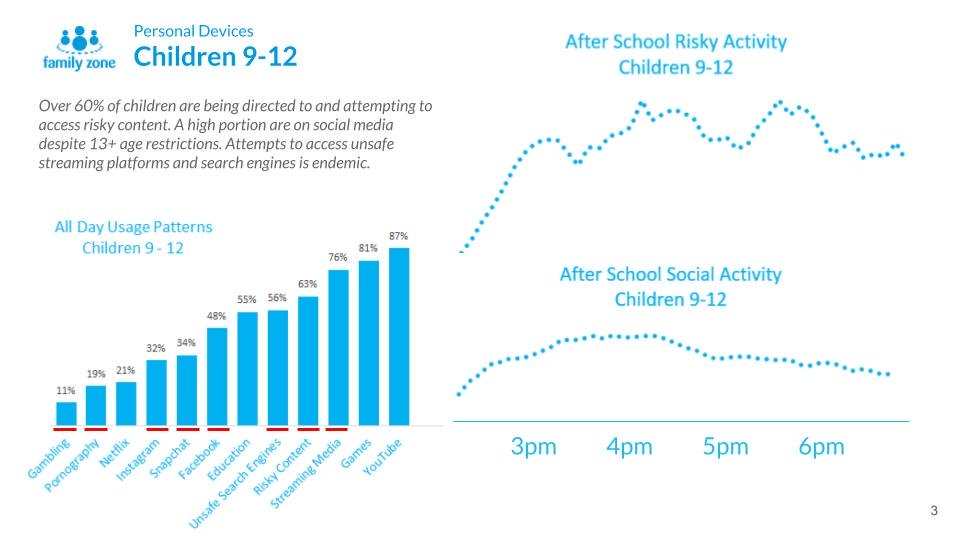
Nearly one in five kids in the 9-12 age group are on the hunt for explicit material, while two-thirds are seeking out other risky content. Over three-quarters are into streaming media, which includes predator-magnets like TikTok (formerly Musical.ly).
Younger teens (13-15) are heavily focused on social media, gaming, streaming and YouTube. In this age group, more than two-thirds are looking for pornography on any given day, and 18% are seeking access to gambling sites.
-3.jpg?width=960&name=Copy%20of%20Infographic%20Stats%20and%20Other%20Slides%20(1)-3.jpg)
Among the oldest teens in our data set, aged 16-17, YouTube remained the most popular drawcard (91%), following closely by social and streaming media. A quarter were looking for gambling sites and just over half for porn.
The When and The Where
Student devices are generally protected to some degree at school. But that doesn’t stop 35% of children attempting to access porn on school grounds, or 55% from trying to get into their social media accounts.
But it’s after school when risky activity really picks up - beginning right from the home-time bell and climbing upwards until dinner-time.
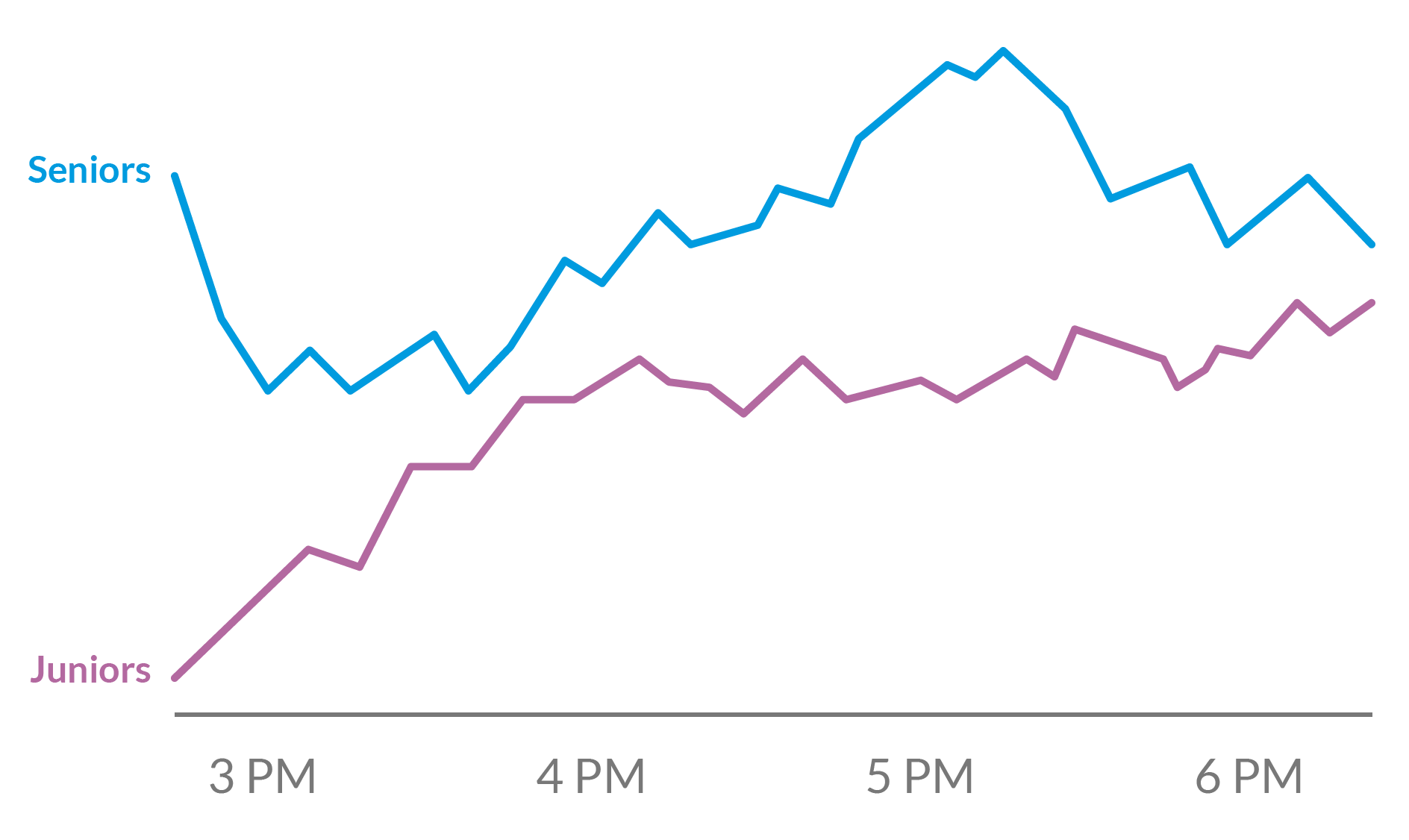
But the most dangerous time for kids online is between 10 pm and 2 am, according to Family Zone cyber experts Dave and Katie Kobler of educational consultancy Protect Our Kids.
“It’s that time of night when mum and dad go to bed, so often the WiFi is left on, and we find that young people - whether they want to be or not - they often get caught in this trap of watching porn online,” says Katie.
Often it’s material “they don’t even want to be looking at - but they feel helpless to look away.” This is also prime-time for bullying and body-image issues to occur. For this reason, experts refer to this time period as “The 10 pm Trap.”
Keeping devices out of bedrooms can cut the risk of online abuse from child predators in half, advises former internet detective and Family Zone cyber expert Brett Lee.
The digital learning revolution has created new opportunities and new challenges for schools. Family Zone Education Solutions takes a uniquely holistic approach to keeping students focused, safe and balanced online. To book a demo or learn more, visit familyzone.com/schools
Topics: Cyber Safety, Cyber Experts, Mobile Apps, hate speech, classroom management, online pornography, Social Media